Impact ReSistAnt ROBOTIC Body PANELS AND DESIGN.
Origin
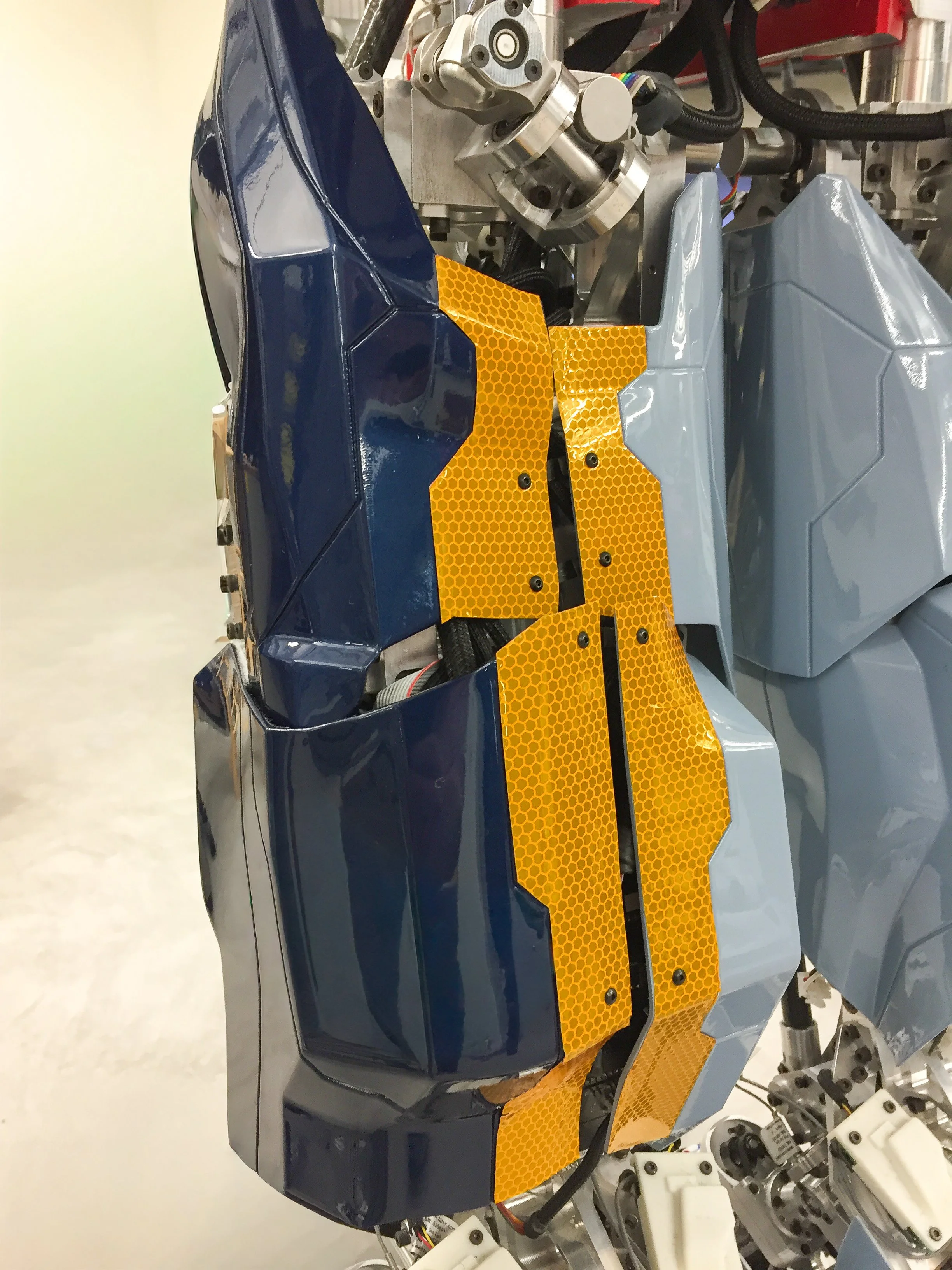
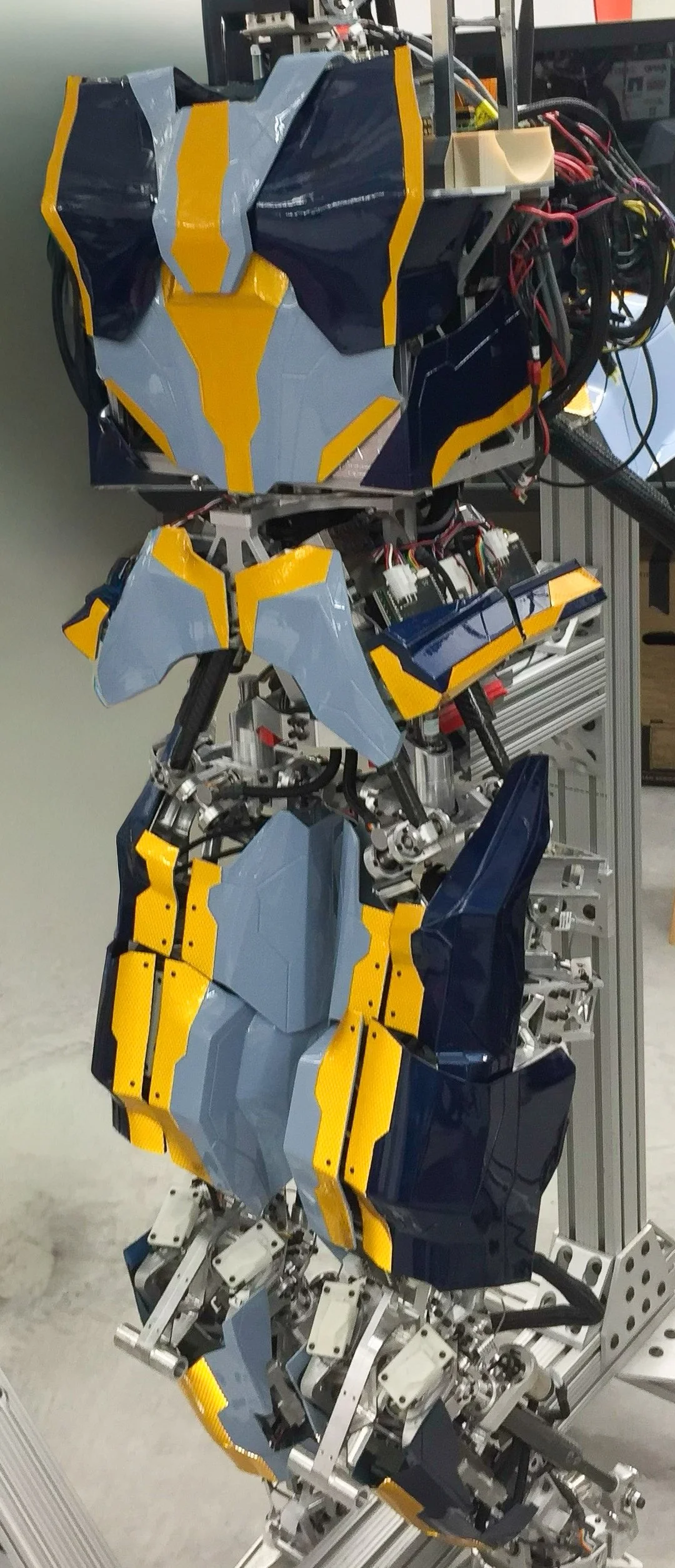
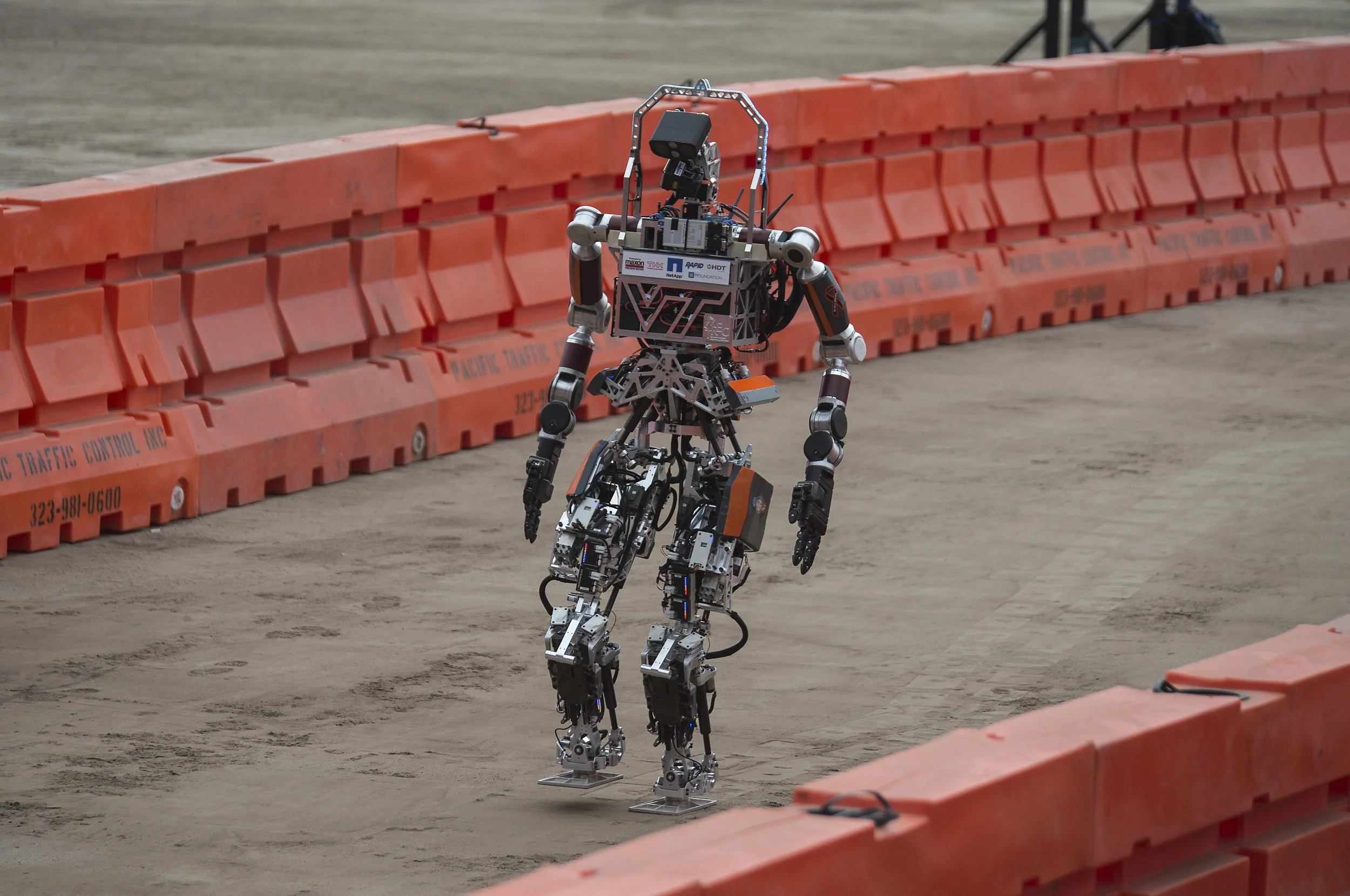
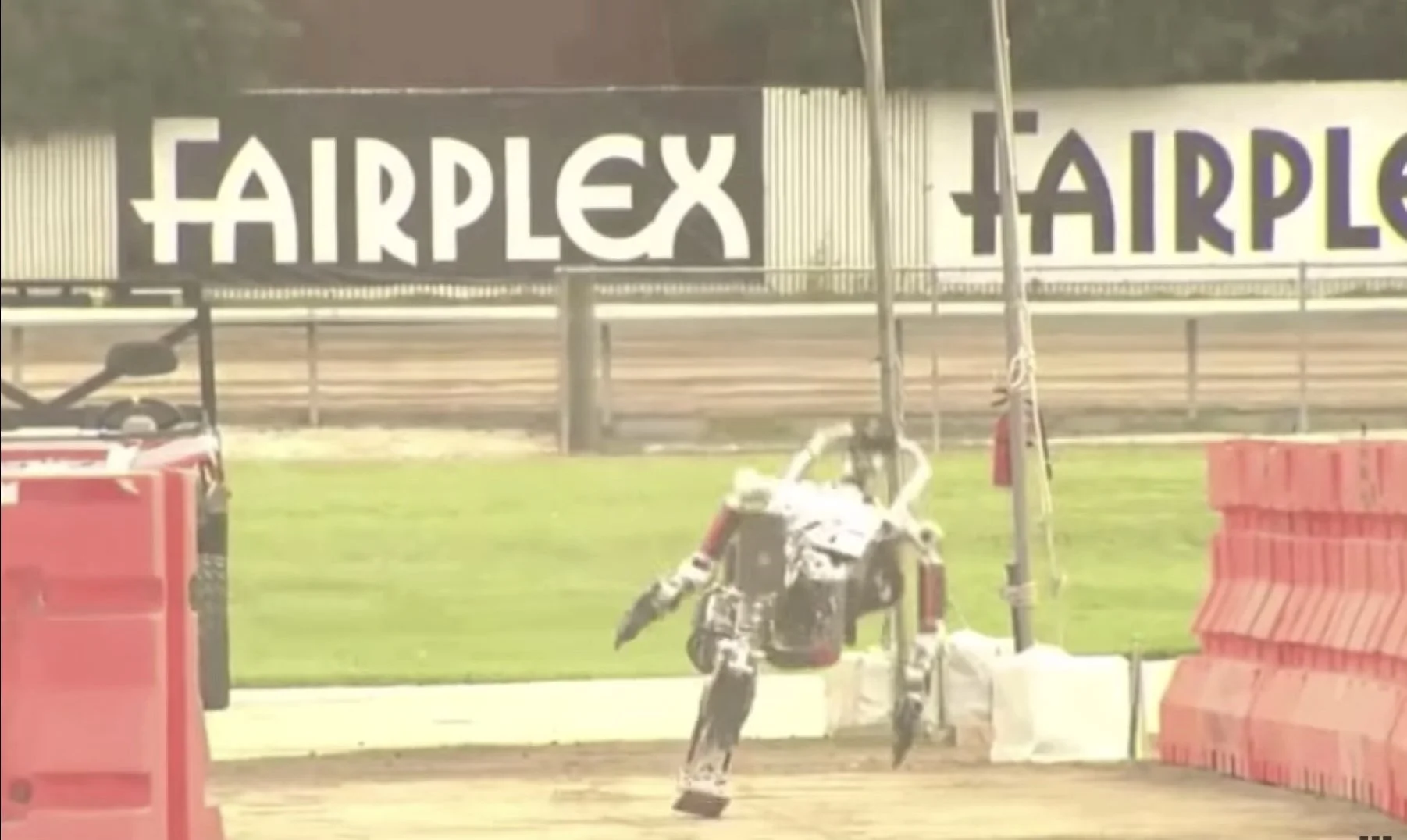
The project began with a request to develop protective exterior panels for ESCHER, Virginia Tech’s humanoid robot platform developed for the DARPA Robotics Challenge, a competition focused on advancing robotic systems for emergency-response and industrial applications. ESCHER’s exposed mechanical structure required panels that could protect vulnerable components for the competition beginning in a matter of weeks from the request. While the initial panels proved effective in protecting the robot during a fall in the DARPA Robotics Challenge, competition conditions revealed the need for additional impact-resistant body panels that could absorb more contact and shield exposed hardware.
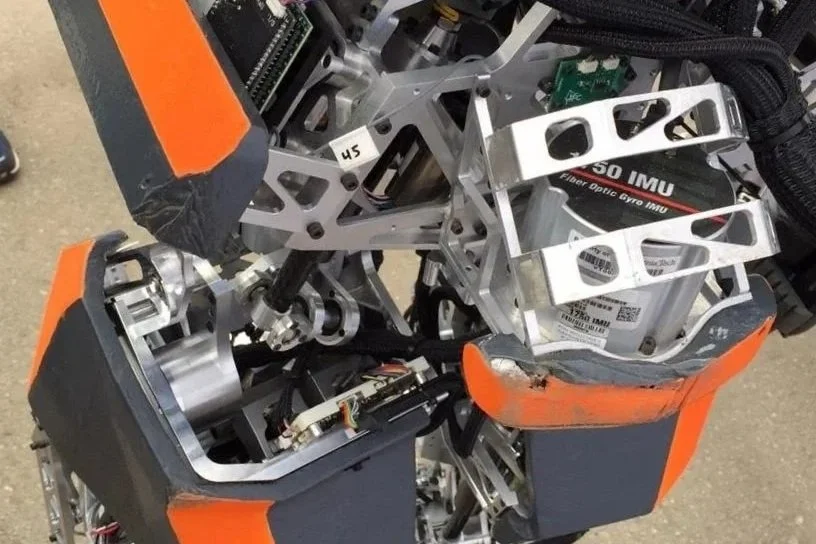
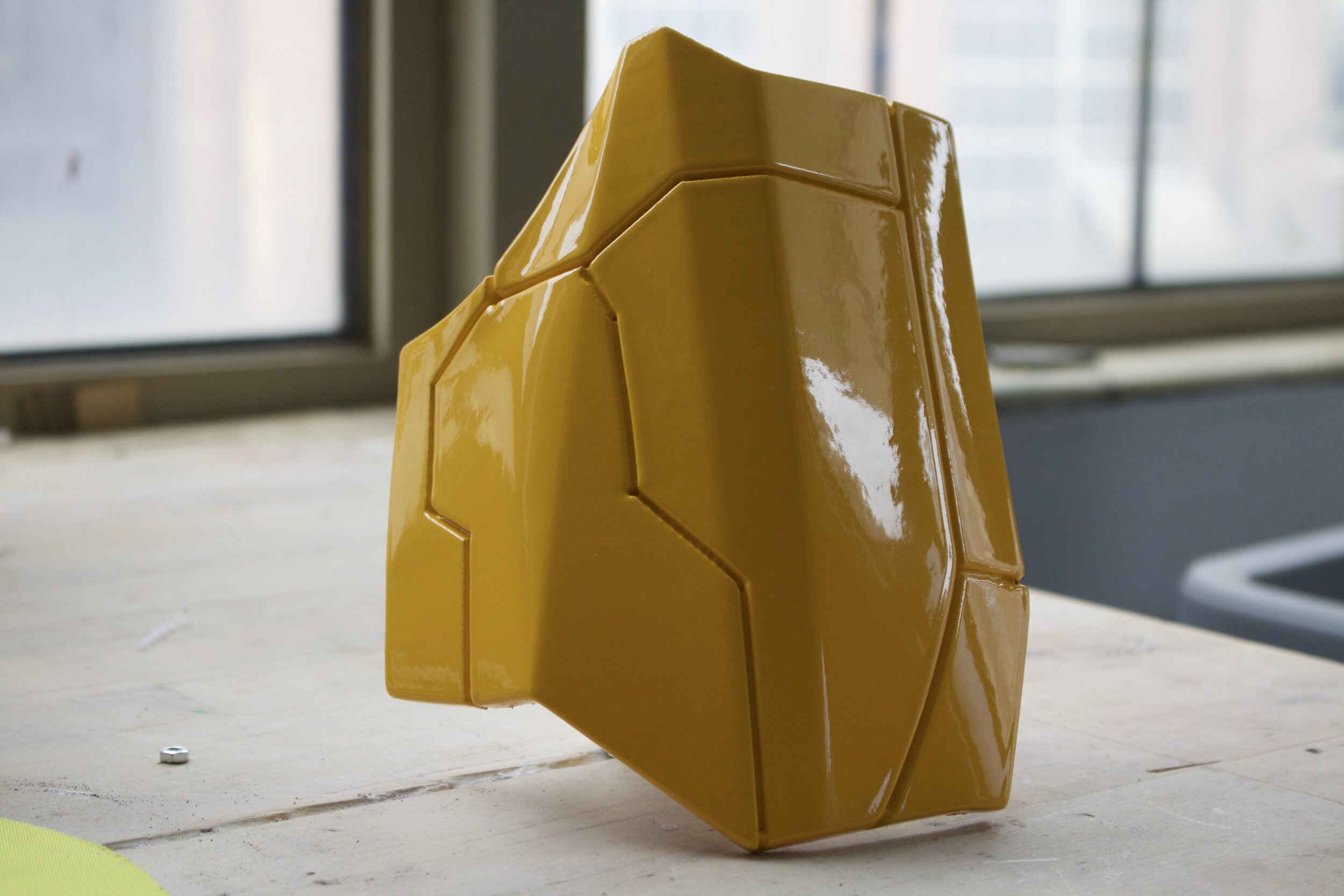
Material and finish studies tested how 3D-printed forms, vinyl graphics, ceramic coatings, paint systems, and surface textures could create panels that were durable, visible, and visually integrated with the robot. These studies helped translate digital models into physical prototypes while refining the relationship between protection, form, and identity.
DEVELOPMENT
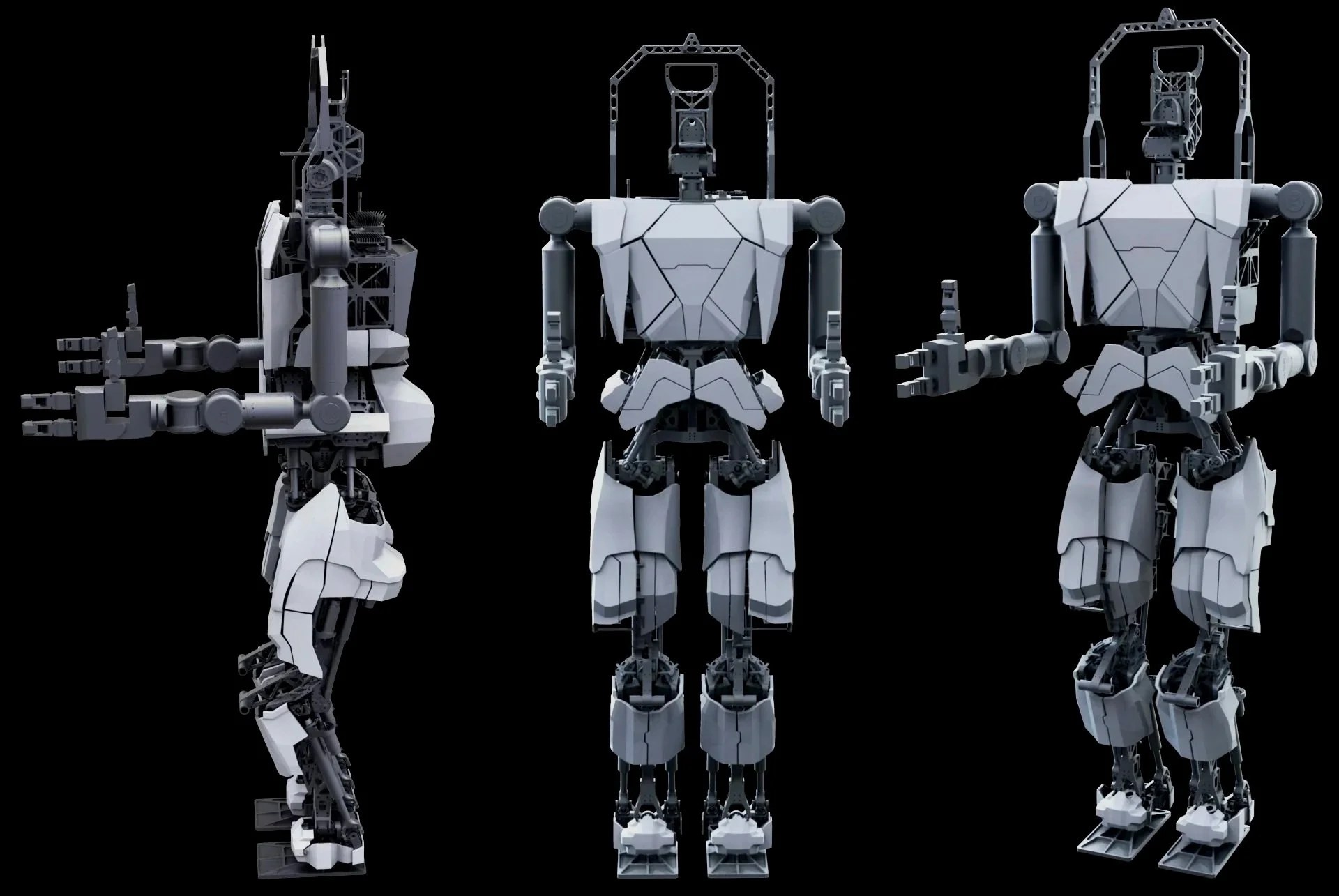
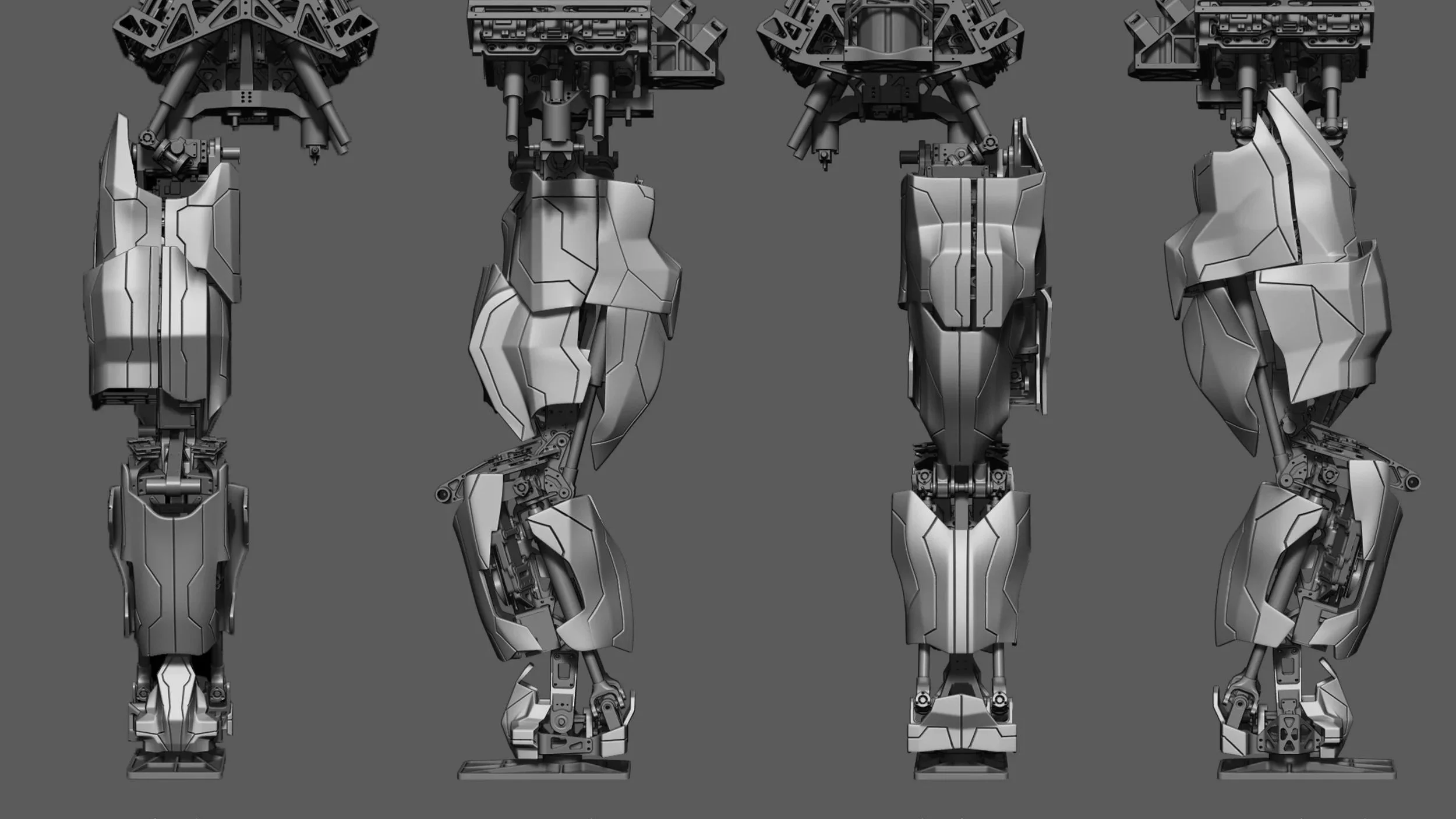
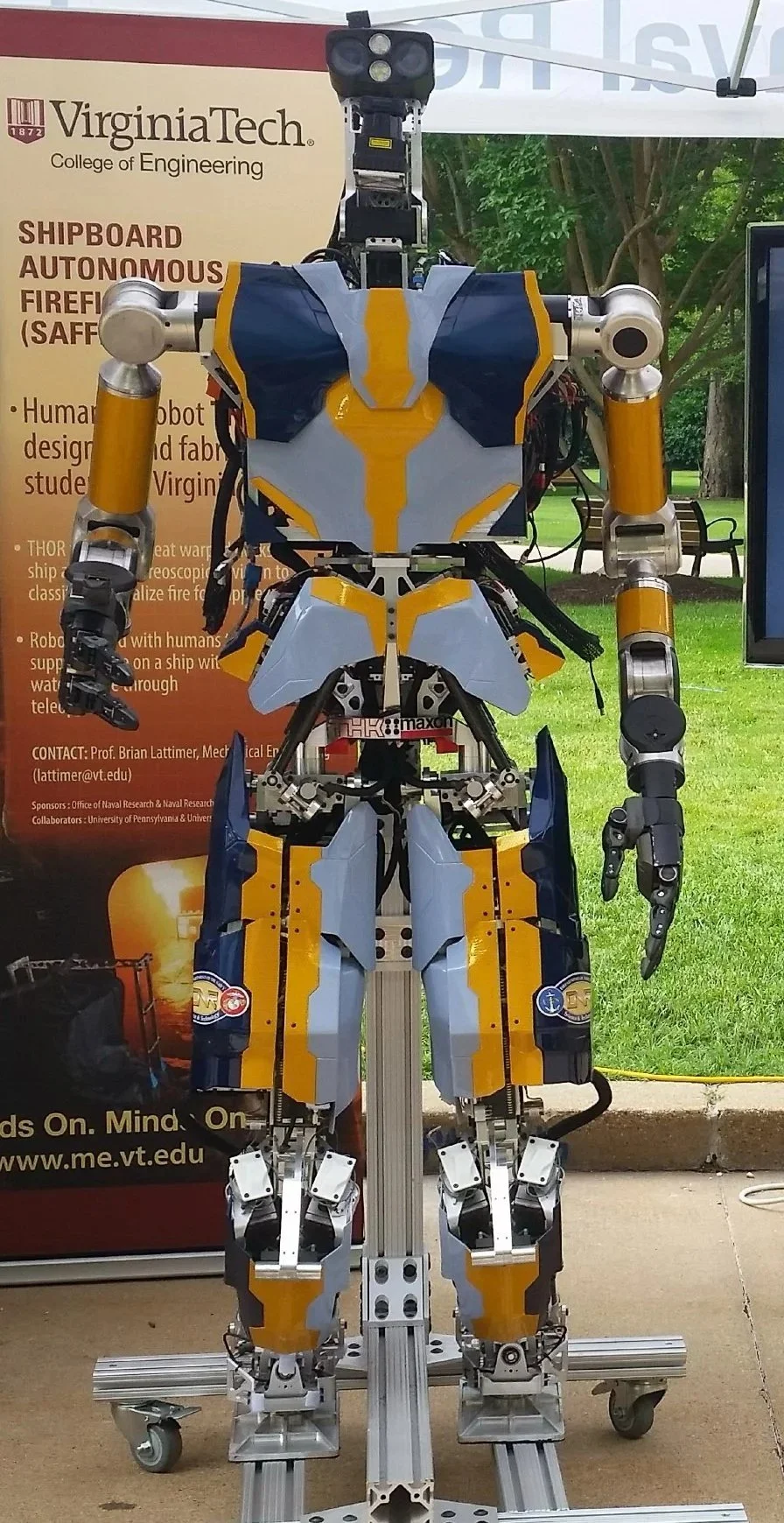
This project expanded from a quickly fabricated but effective first set of protective panels into a collaborative, grant-funded research project through the Institute for Creativity, Arts, and Technology’s SEAD initiative. Working across art, graphic design, and engineering, Sam Blanchard collaborated with Professor Meaghan Dee in Graphic Design, Professor Brian Lattimer in Mechanical Engineering, and graduate assistant Phat Nguyen to develop application-specific body panels for the ESCHER humanoid robot. The team studied the robot’s range of motion, vulnerable mechanical areas, attachment points, surface geometry, material options, and graphic identity to create panels that functioned as both protection and visual communication.
FINAL FORM
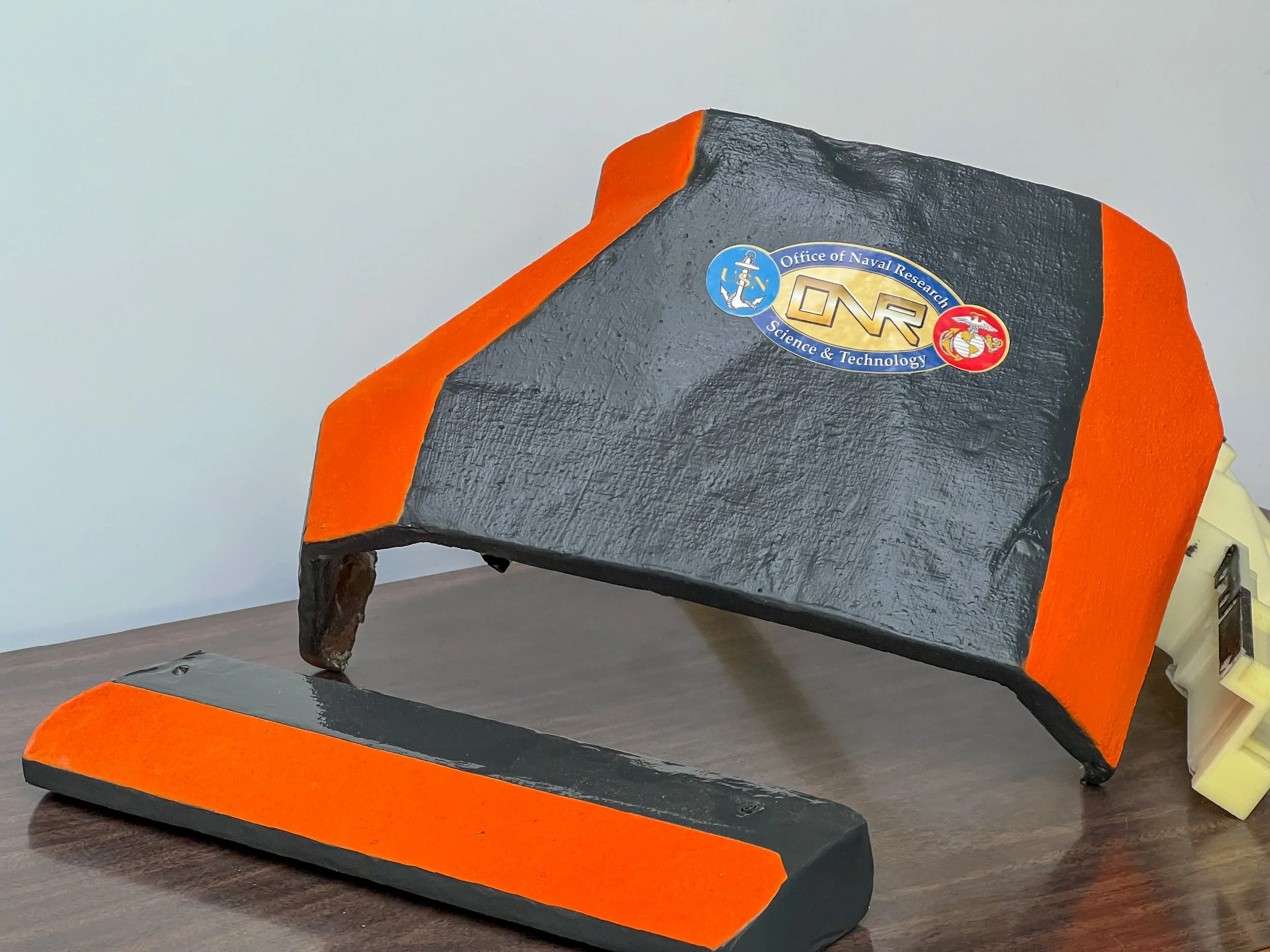
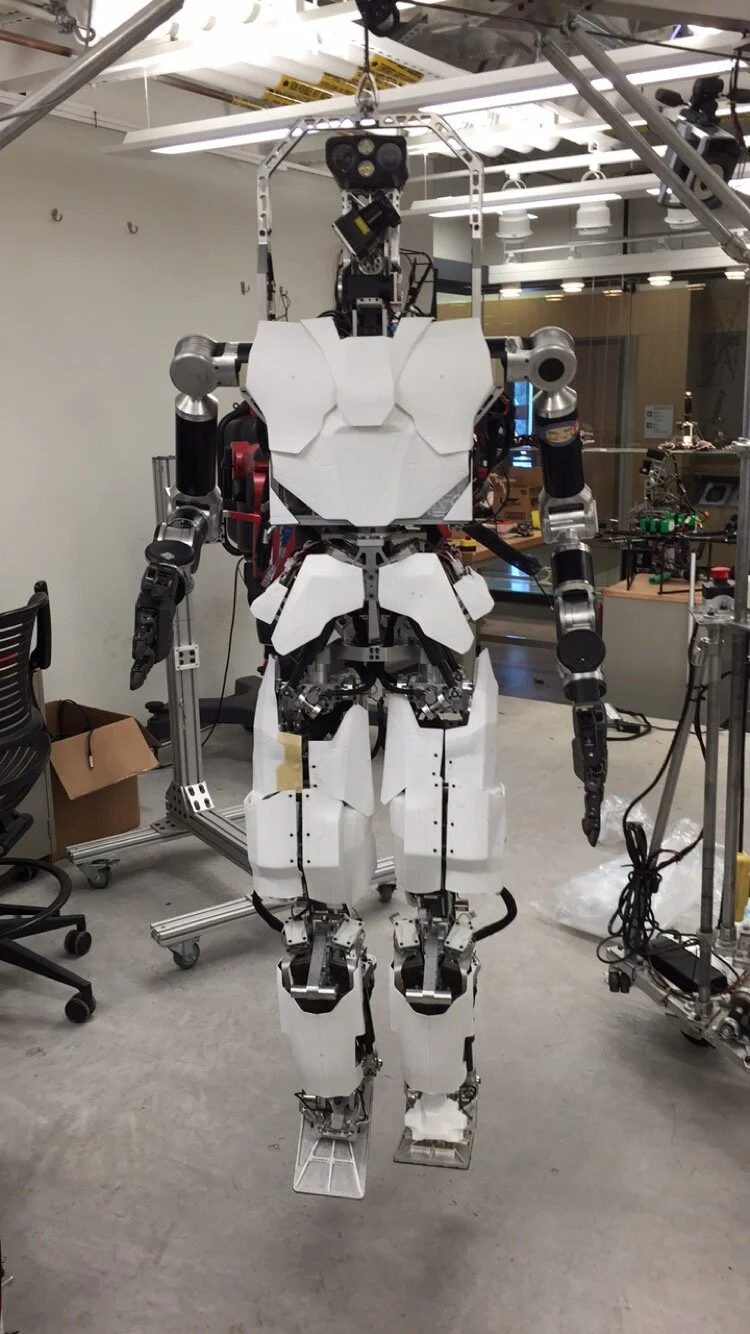
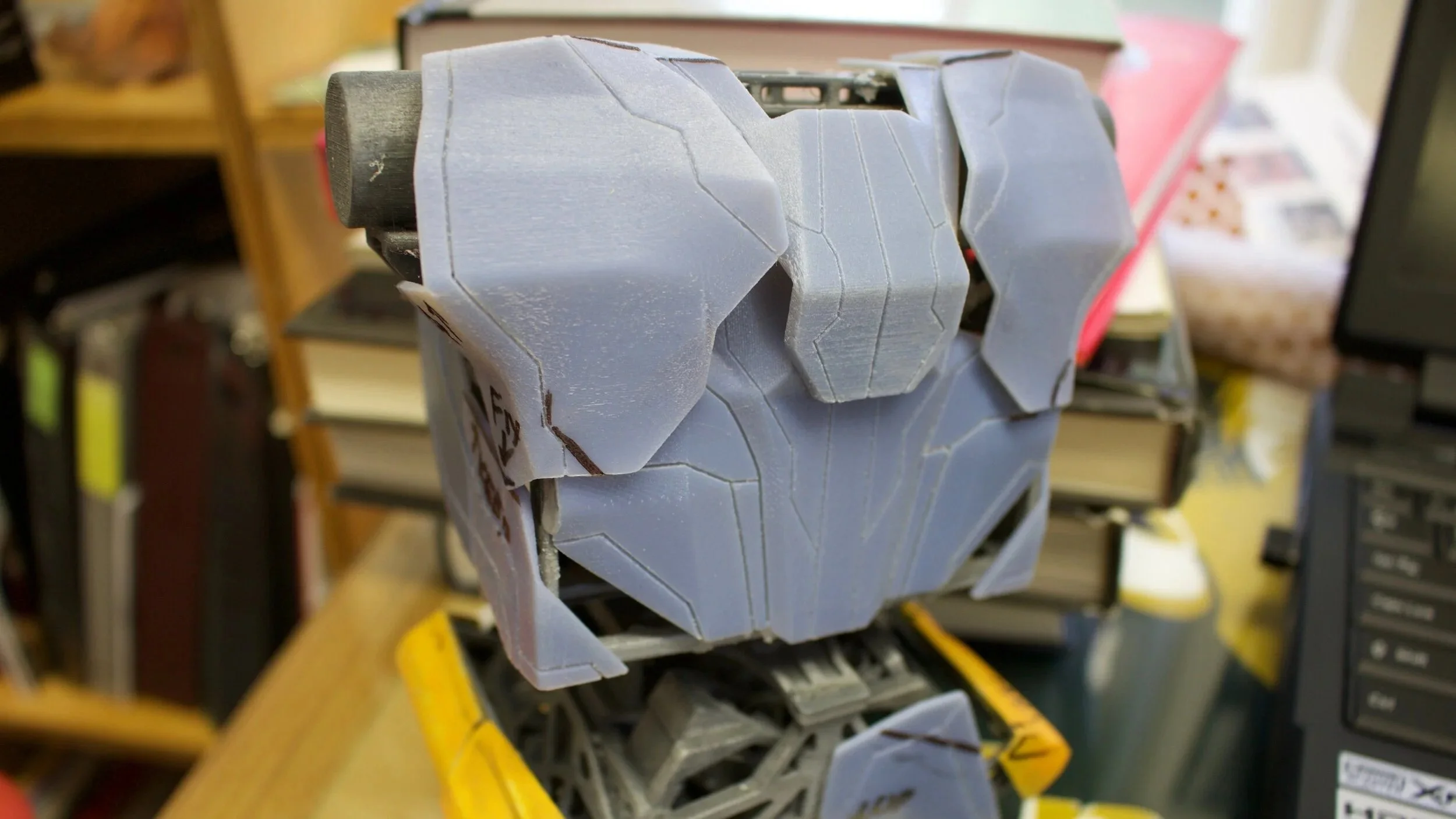
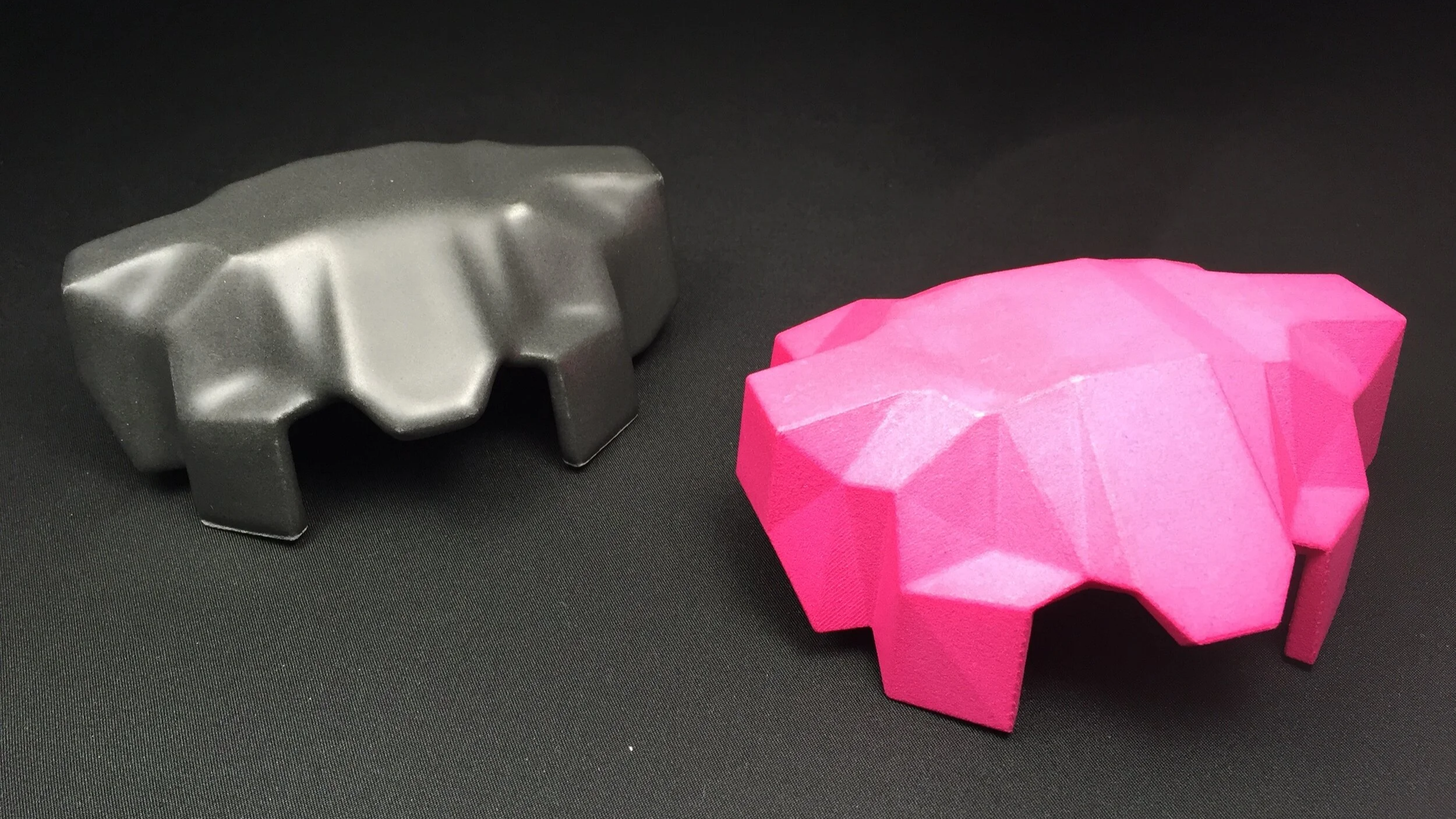
The final body-panel system was adapted for the SAFFiR humanoid firefighting robot platform, developed for use on naval ships in emergency scenarios. The completed panels combined impact protection, high-visibility graphics, and a task-specific visual identity that helped communicate the robot’s role as a first-response tool.